County Conservation District Considering Possible tax Levy
April 30, 2011
County conservation district considering possible tax levy
Saturday, April 30, 2011 08:46 PM
By MICHAEL J. MAURER
ThisWeek Community Newspapers – Licking County
The Licking County Soil and Water Conservation District began a marketing campaign April 27 in anticipation of what may be its first-ever property-tax levy on the fall ballot.
As recently as 2009, the district had a budget as high as $470,000 but, as finances have become increasingly tight in state and county governments, district administrator Jim Kiracofe said budgets in the next few years may fall below $100,000 annually.
"In 2012, maybe we'll get $60,000, $70,000, I don't know," Kiracofe said.
In 2009, the county provided $240,000 for the district, but that amount was cut to $122,000 in 2010 and 2011. Matching money from the state decreases proportionately.
Kiracofe spoke to about a dozen county residents April 27 at the Newark Public Library but he said the people who attend the meetings already know about the district. The important thing, he said, was to make sure the voting public was aware of the district's existence.
"Most people don't have a clue who we are," Kiracofe said. "This is our opportunity to tell our story one-on-one."
Conservation districts are direct political subdivisions of the state of Ohio rather than traditional county agencies. But counties have traditionally provided much of the funding, because of the importance of land conservation to county development, Kiracofe said.
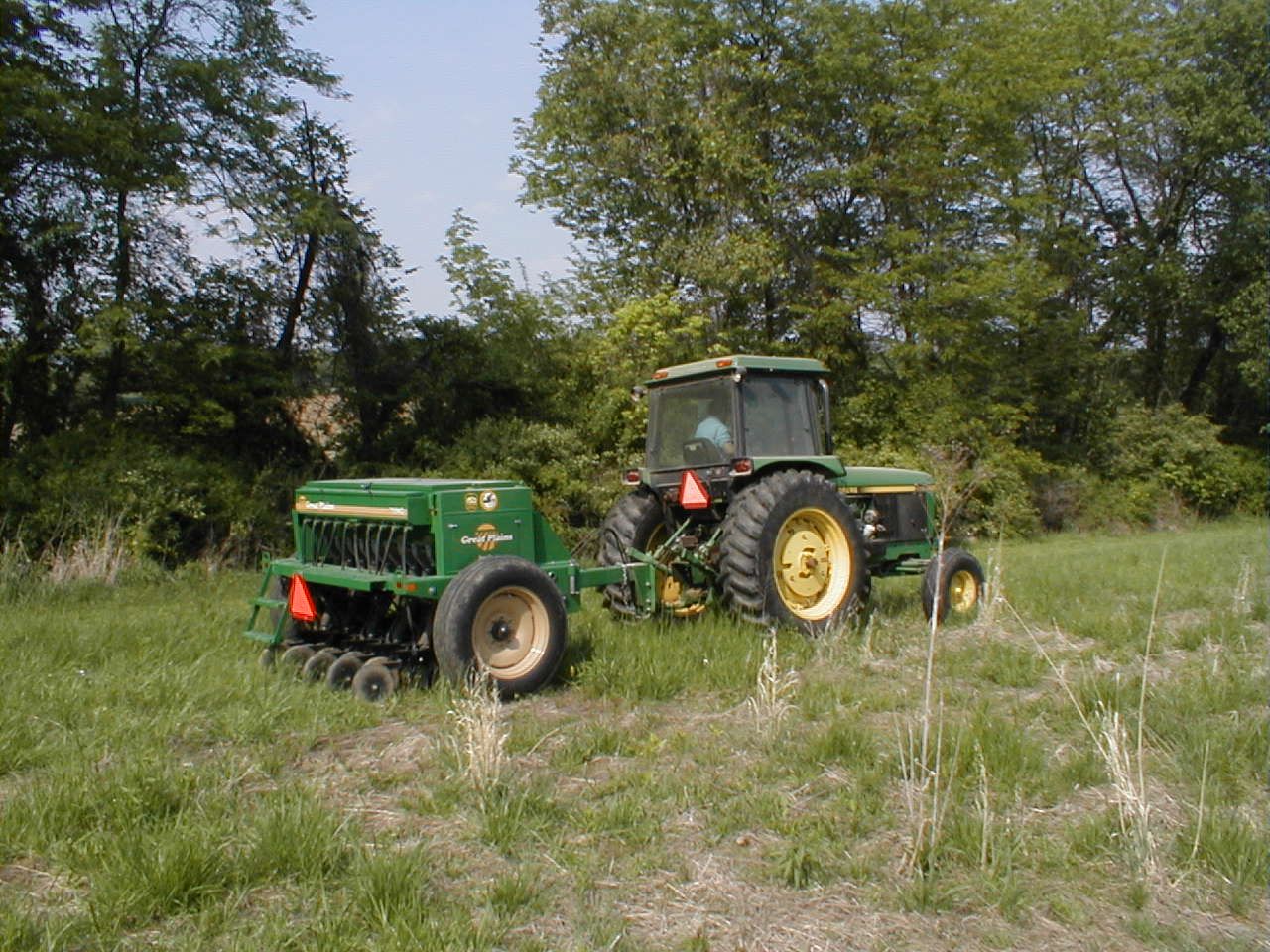
The district's activities include endorsing sound agricultural practice for farmers, farmland preservation, urban development technical assistance and various education programs. The district received more than 6,000 inquiries last year.
As an example of the work the district does, Kiracofe noted that, while storm water runoff is becoming an increasingly familiar issue because of national EPA regulations, responses to runoff typically include only pavement and roofs and the retention ponds necessary to capture rainwater that otherwise would have percolated into the ground.
But Kiracofe said such measures underestimate the effect of development because soil also becomes compacted during construction, meaning that much of the apparent greenery of yards is also impervious to rain and thus contributes to runoff.
"Around the house, there is a whole lot of compaction that is not being taken into account," Kiracofe said. "They grade it and roll out sod and water it and it looks green but that is not infiltrating water. It will take a long time to infiltrate."
Any old trees that homeowners expect to keep will slowly deteriorate as a result, Kiracofe said.
"My vision is this organization, if you buy a piece of property and you have trees on the property and water where you want it, a good well and you don't have water coming in from someplace else, you have been impacted by the mission we have," Kiracofe said. "That's why our ground is so attractive here in Licking County."
Kiracofe said conservation districts have been around for many decades longer than the EPA and they played an important role in persuading the public to support environmental preservation.
"We developed this conservation legacy," Kiracofe said.
But without funding, the districts may have to close mor greatly reduce their services.
"It's hard to imagine Jan. 1 someone coming in and us saying we can't help you," Kiracofe said.