Conservation Partner Programs
Under Construction ... please excuse the clutter!
Licking County Soil and Water Conservation Distirct works closely with several Conservation Partners.
- USDA-Natural Resources Conservation Service (NRCS)
- Ohio Department of Natural Resources (ODNR)
- U.S. Fish and Wildlife Service (USFWS)
- Hartford Fair
Conservation Partner Programs
o Agricultural Assistance
o Forestry Assistance
Agricultural Assistance
Farm Bill Assistance
Ag Pollution Abatement
Best Management Practices (BMP's)
Farm Bill Assistance
- Conservation Reserve Program (CRP)
- Environmental Quality Incentives Program (EQIP)
- Conservation Reserve Enhancement Program (CREP) – Big Walnut Creek Watershed
- Wildlife Habitat Incentives Program (WHIP)
- Wetland Reserve Program (WRP)
- Conservation Security Program (CSP)
- Farmable Wetlands Program (FWP)
Farm Bill Assistance
The Natural Resources Conservation Service (NRCS) has an array of natural resources conservation programs designed to assist landowners to reduce soil erosion, enhance and improve water quantity and quality, increase wildlife habitat, and reduce damages caused by floods and other natural disasters.
- Conservation Reserve Program (CRP)
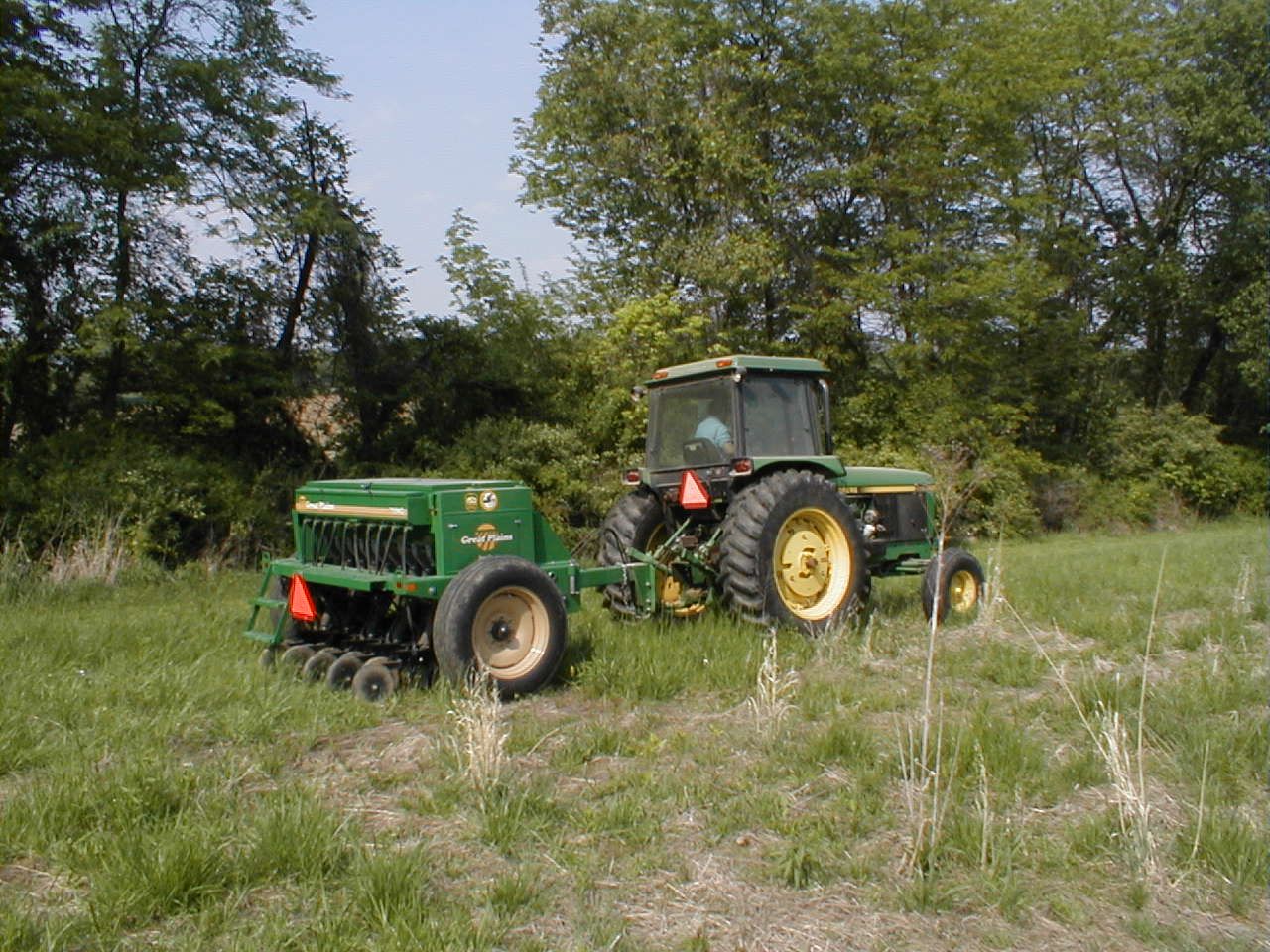
The Conservation Reserve Program (CRP) is a voluntary program for agricultural landowners administered through the Farm Service Agency (FSA). This program allows producers to receive an annual rental payment and/or cost-share assistance to establish long-term, conservation land cover on eligible farmland.
For additional information please visit:
Conservation Reserve Program (CRP) - USDA-FSA
Conservation Reserve Program (CRP) - NRCS - Environmental Quality Incentives Program (EQIP)
Environmental Quality Incentives Program (EQIP) is a voluntary program that is tailored to both livestock and grain production operations. Funds provided through the 2002 Farm Bill allow private landowners to make commitments to conservation as they work to improve or meet national environmental quality standard goals.
For additional information please visit:
Environmental Quality Incentives Program (EQIP) - NRCS - Conservation Reserve Enhancement Program (CREP) – Big Walnut Creek Watershed
Conservation Reserve Enhancement Program (CREP) - Big Walnut Creek Watershed
This is a voluntary program intended to improve water quality and wildlife habitat while reducing erosion in specific geographic areas that have been identified as impacted areas due to agricultural activities, non-point source water pollution or habitat destruction.
For additional information please visit:
Abstract Upper Big Walnut Creek Watershed CREP Proposal
Upper Big Walnut Creek Watershed CREP- Enroll Now - Wildlife Habitat Incentives Program (WHIP)
The Wildlife Habitat Incentive Program (WHIP) is a voluntary program for conservation-minded landowners who want to develop and improve wildlife habitat on agricultural or nonindustrial private forest land. WHIP cost-share agreements between NRCS and the participant generally last from one year after the last conservation practice is implemented but not more than 10 years from the date the agreement is signed. For additional information, please click on the following websites:
For additional information please visit:
Wildlife Habitat Incentive Program (WHIP)-NRCS
Wildlife Habitat Incentive Program (WHIP)-USDA Forest Service
Wildlife Habitat Incentive Program (WHIP) – Ohio NRCS - Wetland Reserve Program (WRP)
- Conservation Security Program (CSP)
Conservation Security Program (CSP) is a voluntary program that rewards agricultural producers who have a documented history of good land stewardship. The Natural Resources Conservation Service (NRCS) administers this program and provides financial and technical assistance to eligible producers. For additional information please visit:
Conservation Security Program (CSP)-NRCS
Conservation Security Program (CSP) – Ohio NRCS - Farmable Wetlands Program (FWP)
The Farmable Wetlands Program (FWP) is a voluntary program to restore up to 500,000 acres of farmable wetlands and associated buffers by improving the land’s hydrology and vegetation. Eligible producers in all states can enroll eligible land in the FWP through the Conservation Reserve Program (CRP).
Sign up offers are accepted on a continuous sign-up basis and are automatically accepted provided the acreage and producer meet certain eligibility requirements. Acceptance is not determined by a competitive offer process. However, once 1 million acres nation-wide and 100,000 acres per state is obtained, the sign-up will cease.
For additional information please visit:
USDA -FSA - Best Management Practices (BMPs)
With the assistance of the Natural Resources Conservation Service (NRCS), the District works voluntarily with landowners to abate agricultural pollution by implementing Best Management Practices (BMPs) through conservation planning such as implementing heavy use pads, access roads, spring developments, water systems, livestock grazing systems, and riparian zones. There is an array of Sediment / Erosion Best Management Practices better known as BMPs, which focus on the protection Ohio's soil and water resources. BMPs promote the use of practices that are environmentally friendly, economically viable and socially acceptable.
Review the links below for individual practice information so you can determine which Best Management Practices will work best for you!
Soil Improvement Practices
Water Improvement Practices
Technical and Cost-share Assistance
The Ohio State University Extension can provide management suggestions based upon current university research, information and expertise. Use the website link to locate your local county agents.
The Ohio Department of Natural Resources, Division of Forestry provides cost-share, educational and technical forestry services to landowners.
The Partners for Fish & Wildlife program of the U.S. Fish & Wildlife Service offers technical and financial assistance to landowners for restoration of native habitats.
The Ohio Natural Resources Conservation Service can provide information on federal cost-share opportunities and assistance.
The Ohio Division of Natural Areas & Preserves has information about rare species or ecological communities that may occur on your land and what you can do to help conserve them.
Ag Pollution Abatement
The Ohio Revised Code authorizes local conservation districts to investigate agricultural pollution complaints and to offer voluntary assistance to agricultural producers for resolving agricultural pollution problems to protect local water resources.
For additional information please visit:
What is Ag Pollution Abatement? – ODNR-Div. of Soil and Water Resources
Pollution Abatement Program
Ohio Livestock Manure Management Guide
Guidelines for Livestock Producers
Manure Management Issues, Challenges and Solutions - Series of Fact Sheets
Winter Weather Complicates Manure Application
USDA-NRCS Waste Utilization Standard #633
Ohio Livestock Environmental Assurance Program (LEAP) Handout
Forestry Assistance
- Call B4U Cut
- Timber Harvest Notice of Intent
- Forestry Tax Incentive Program
- Ohio Master Logger Program
- Woodland Stewards
- MR WIGS
- Forestry Legacy Program
- Ohio Trees Index
- Emerald Ash Borer (EAB)
Ohio Forests growth has been very dynamic throughout Ohio. It's believed that prior to European settlement, there were more than 25 million acres of forests covering 95 percent of the state. It has been said that a squirrel could go from one corner of the state to the other without ever touching the ground. Solely hoping from tree top to tree top. Though that may be exaggerated, Ohio was once dominated by truly magnificent hardwood forests.
But the abundant forests got in the way of a growing nation. They were removed with a passion beginning in the late 1700s. Ohio's fertile ground made it ideal for farming and much of the land was cleared. By 1900, forests covered less than 15 percent of the state, and by 1940, only 12 percent of Ohio (3.2 million acres) remained forested.
Through forest education and conservation movements, Ohioans have increased the total amount of forest acreage in Ohio to approximately 33 percent (8.2 million acres). Most of Ohio's forest land is owned by private landowners. Land stewardship begins with you, the private landowner. Do your part in preserving Ohio’s forests for future generations.
Call B4U Cut
Timber Harvest Notice of Intent
A voluntary program designed to assist woodland landowners, loggers, and foresters with the pre-planning of logging activities. The program is designed to help the responsible parties select best management practices (BMP’s) that will reduce soil erosion and maintain the harvest site to State standards found in the Agricultural Pollution Abatement Rules and Standards (Ohio Administrative Code 1501:15-5-01 to 15-5-18).
Timber Harvest Notice of Intent Form
Forestry Tax Incentive Program
Woodland Stewards
MR WIGS
Ohio Master Logger Program
The Ohio Master Logger Program is a voluntary effort that promotes safety and use of proper equipment and techniques when working in the woods. This program is supported by ODNR Division of Forestry.
To find a Master Logger member in your area click here.
Forestry Legacy Program
Forestry Legacy Program is a national program of the USDA Forest Service in cooperation with the states. The program is designed to prevent the conversion of forest land to a non-forest use. The program can assist landowners in accomplishing their forest management goals, maintain their investment for future generations, and pay them for the development values of the property.
Ohio Woodland Stewards Program
Ohio Woodland Stewards Program is a program offered through The Ohio State University, which provides woodland owners a wide variety of forestry skills and trainings so they then can make better informed decisions when it comes to managing their woodland acreage.
Ohio Forest Tax Law
Ohio Forest Tax Law (OFTL) is administered by the Ohio Department of Natural Resources, Division of Forestry, according to the Ohio Revised Code and the Ohio Administrative Code. In order to qualify for OFTL, landowners must have a written plan to guide them in the management of their forestland. To find out more information on Ohio Forest Tax Law (OFTL) click here.
Ohio Trees Index
Trees provide us more than one could ever imagine. Trees provide shade from the hot summer sun, help maintain clean air and water, enrich and hold the soil on the land. In addition they provide food and shelter to wildlife. The more we learn about trees, the more our enjoyment and appreciation for them will also grow. Review the Ohio Trees Index to learn more about your favorite tree. Find a tree’s common name, scientific name and the family name, along with a brief description.
Emerald Ash Borer (EAB)
Emerald Ash Borer (EAB) is having a diverse impact on Ohio’s rural and urban forests. The Ohio Division of Forestry is taking proactive steps on state forests, as well as encouraging municipalities and woodland owners to do likewise. Learn more about the Emerald Ash Borer here.
Call B4U Cut
Call Before You Cut campaign is an effort to provide in-depth forest management information to Ohio’s 400,000 landowners. The program is a joint effort of the ODNR Division of Forestry, OSU Extension, Rural Action, the Ohio Federation of Soil & Water Conservation Districts, ODNR Division of Soil & Water Conservation, the Society of American Foresters, The Nature Conservancy, the Better Business Bureau, the American Tree Farm System, the Natural Resources Conservation Service, the USDA Forest Service Northeastern Area, and the National Wild Turkey Federation
Natural Resources Area (NRA)
- Purpose
- Schedule of activities
- Results
- Photo gallery
Natural Resources Area
The four-acre Natural Resources Area is located on the Hartford Fairgrounds in Croton, Ohio. The beautiful area highlights unique wildlife habitats, conservation practices, and the positive use of recycling, waste water management and backyard conservation to emphasize the importance of our natural resources.
The Natural Resources Area is primarily utilized at the Hartford Fair held in early August. However, it is not uncommon to see events held throughout the year.
Natural Resources Area
The Licking County SWCD and other conservation partners have continued to work together this year to expand the Natural Resource Area. The Area is located on the Northwestern portion of the Hartford Fair Grounds. We hope you were able to stop back and check it out!
Hartford Independent Fair
Check out the 2009 fair events!
Natural Resources Area – Schedule of Events
Check out the 2009 fair events!
Natural Resources Area History
In 2005, seven local conservation groups joined forces with the community to emphasize the importance of our natural resources. These groups, which consisted of Licking County Soil and Water Conservation District, Licking County Recycling and Litter Prevention, Licking Parks District, Ohio Nature Education, The Dawes Arboretum, The Hartford Fair, and the U.S. Fish and Wildlife Service, decided they needed a more permanent base at the fair that would allow them to show the community why conservation is so vital. Thus began the Hartford Fair Natural Resources Area.
Natural Resources Area
The four-acre Natural Resources Area is located on the Hartford Fairgrounds in Croton, Ohio. The beautiful area highlights unique wildlife habitats, conservation practices, and the positive use of recycling, waste water management and backyard conservation to emphasize the importance of our natural resources.
The Natural Resources Area is primarily utilized at the Hartford Fair held in early August. However, it is not uncommon to see events held throughout the year.
Mission:
To build a sustainable natural resources program celebrating Ohio’s natural heritage that is supported by local conservation partners and organizations in order to provide educational, recreational, and interactive conservation experiences during the Hartford Fair and at other outdoor events.
Natural Resources Area Advisory Board
Licking County Soil and Water Conservation District
Jim Kiracofe & Lindsey Grimm
Phone: 740-670-5330
Licking County Recycling & Litter Prevention
Larry Lloyd & Luellen Felumlee
Phone: 740-670-5125
Licking County Ohio Certified Volunteer Naturalists
Jane Weiland
The Hartford Fair
Larry Hughes & Ed Piar
Phone: 740-893-4881
John McDavid
USFWS
U.S. Fish and Wildlife Service
The National Fish Passage Program
Early in the history of the United States, rivers ran wild, and fish followed them according to their needs. All river fish migrate between feeding and spawning areas and make other seasonal movements to important habitats. In the ensuing years, thousands of culverts, dikes, water diversions, dams, and other artificial barriers were constructed to impound or redirect water for irrigation, flood control, electricity, water supply, and transportation. All of these changed the natural features of countless waterways, blocking the natural migration of fish to historic habitat used for reproduction and growth. As a result, some populations of native fish are gone and others are on the brink of disappearing. An estimated 2.5 million of these barriers still exist, many of which no longer serve their original purpose and were abandoned years ago. Launched by the U.S. Fish and Wildlife Service in 1999, the National Fish Passage Program (NFPP) is a voluntary, non-regulatory effort that provides financial and technical assistance to remove or bypass these artificial barriers that impede the movement of fish and contribute to their decline.
Since 1999, the National Fish Passage Program has
Removed or bypassed 749 barriers across the country. This work supported nearly 15,000 jobs in local communities.
Re-opened 11,249 miles of river, and
Re-opened 80,556 acres to fish passage.
For more information on this program please visit
http://www.fws.gov/fisheries/fwco/fishpassage/
Restore Fish and Wildlife Habitats in Ohio
Over 90% of Ohio’s remaining wildlife habitat occurs on private lands. Land stewardship begins with you, the private landowner. Improving and managing your land for wildlife will make a difference in sustainability in Ohio's natural resources. Also, by promoting wildlife habitat you contribute to species survival, and conservation of soil and water.
Through the U.S. Fish and Wildlife Service - Partners for Fish and Wildlife program, private landowners have the opportunity to meet with a private lands biologist to discuss your goals for your land and to see if the project lends itself to the Partners for Fish and Wildlife Program objectives. If your land is eligible, a biologist will develop a wildlife management agreement to enroll you in the Partners program. This ten-year agreement spells out financial support that the Partners program will offer for wildlife improvements on your property.
For more information on this program click here or visit http://partners.fws.gov/